
Trees in the Garden
The trees in this courtyard come from three sources: some planted by the Colorado Shakespeare Gardens, some by the University of Colorado, and some donated as memorials. Together, they tell a story about what trees meant in Shakespeare's time—and what they mean now.
The English oak next to the Elizabethan Garden was planted in memory of Marlene Cowdery, founder of these gardens. It's the right tree for her. In Shakespeare's England, oak was the tree of empire—so much oak went into building ships for Elizabeth I's navy that England's virgin forests were largely denuded. Shakespeare uses oak as a metaphor for leadership, for strength, for authority that has roots. This oak is still young, but it's patient. It will be here long after all of us.
The Hawthorn in the center of the Midsummer Night's Dream Garden is said to be beloved by faeries. In Titania's bower, "quite over-canopied with luscious woodbine," there's hawthorn mixed with musk-roses and eglantine. Hawthorn blooms early, white and fragrant, and its thorns are serious. It's a tree that guards thresholds—between cultivated and wild, between the human world and the fairy world.
The three espalier trees—two apples and a pear—show what happens when you train a tree against a wall for years. They look small, but check the trunk size. They're old. Espalier takes patience, vision, and the willingness to shape growth over decades. Very Shakespearean, actually. You work with what wants to grow, but you give it form.
And the crabapples? The old ones are "old school"—globular, reliable, the kind they had in the 1970s. The newer one is a 1990s hybrid—different foliage, different blossoms, barely any fruit. Apples appear everywhere in Shakespeare—usually as bitter crabs, the kind that make you pucker. But even the ornamental ones bloom spectacularly in spring.
All images copyright Colorado Shakespeare Garden group.
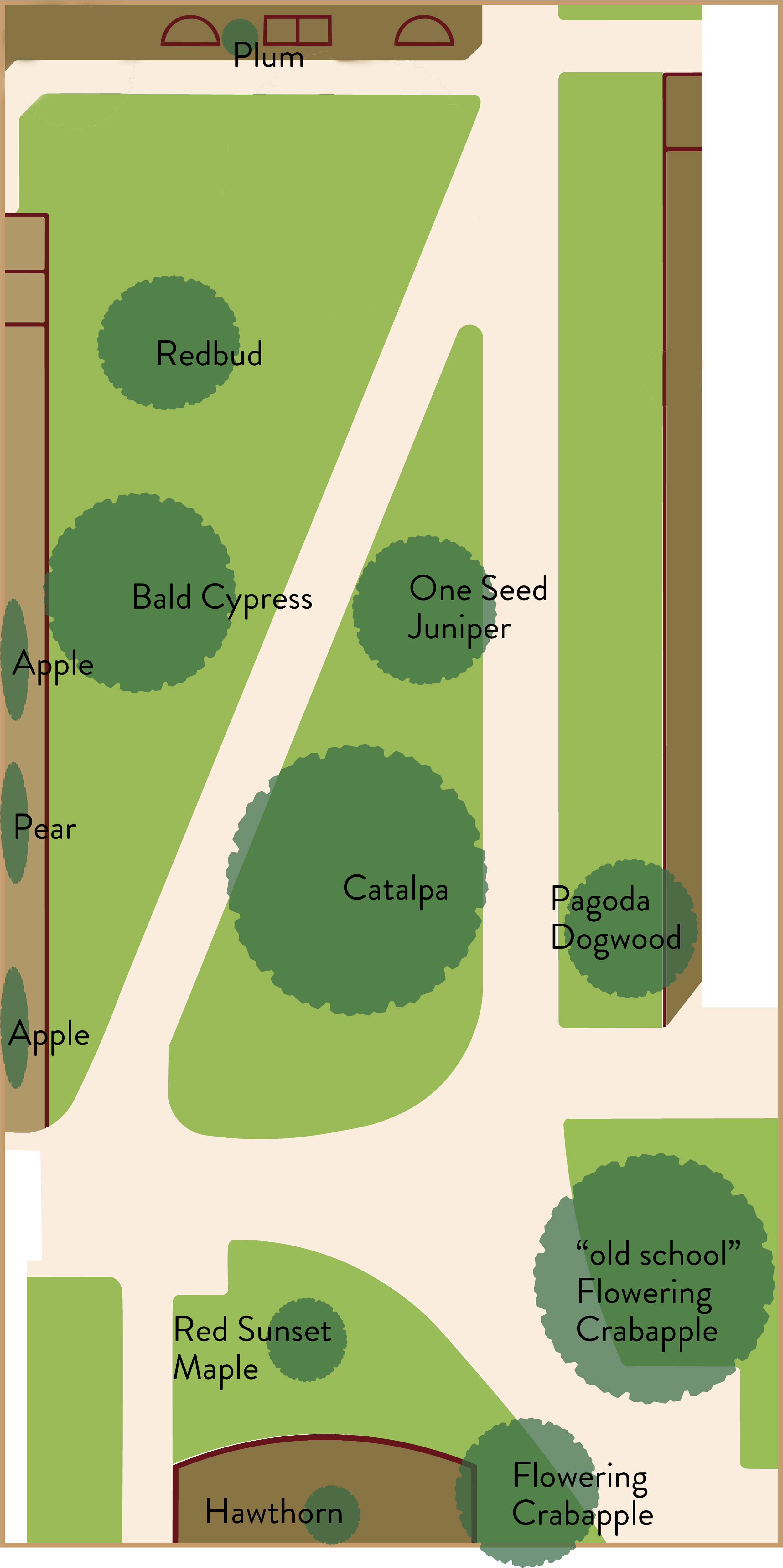
We invite you to use our Tree Map as you follow along with the video.