Birch
Play References:
[Duke]
Fond fathers,
Having bound up the threatening twigs of Birch,
Only to stick it in their children's sight
For terror, not to use, in time the rod
Becomes more mock'd than fear'd.
Measure for Measure, act i, sc. 3
Garden group discussion on Shakespeare’s use of plant:
Botanical Name(s) of varieties common in Shakespeare’s England:
Betula alba
Description:
The name is a very ancient one, probably derived from the Sanscrit bhurga, 'a tree whose bark is used for writing upon.' From its uses in boat-building and roofing it is also connected with the A.S. beorgan, 'to protect or shelter.'
Coleridge speaks of it as the 'Lady of the Woods.' It is remarkable for its lightness, grace, and elegance, and after rain it has a fragrant odour.
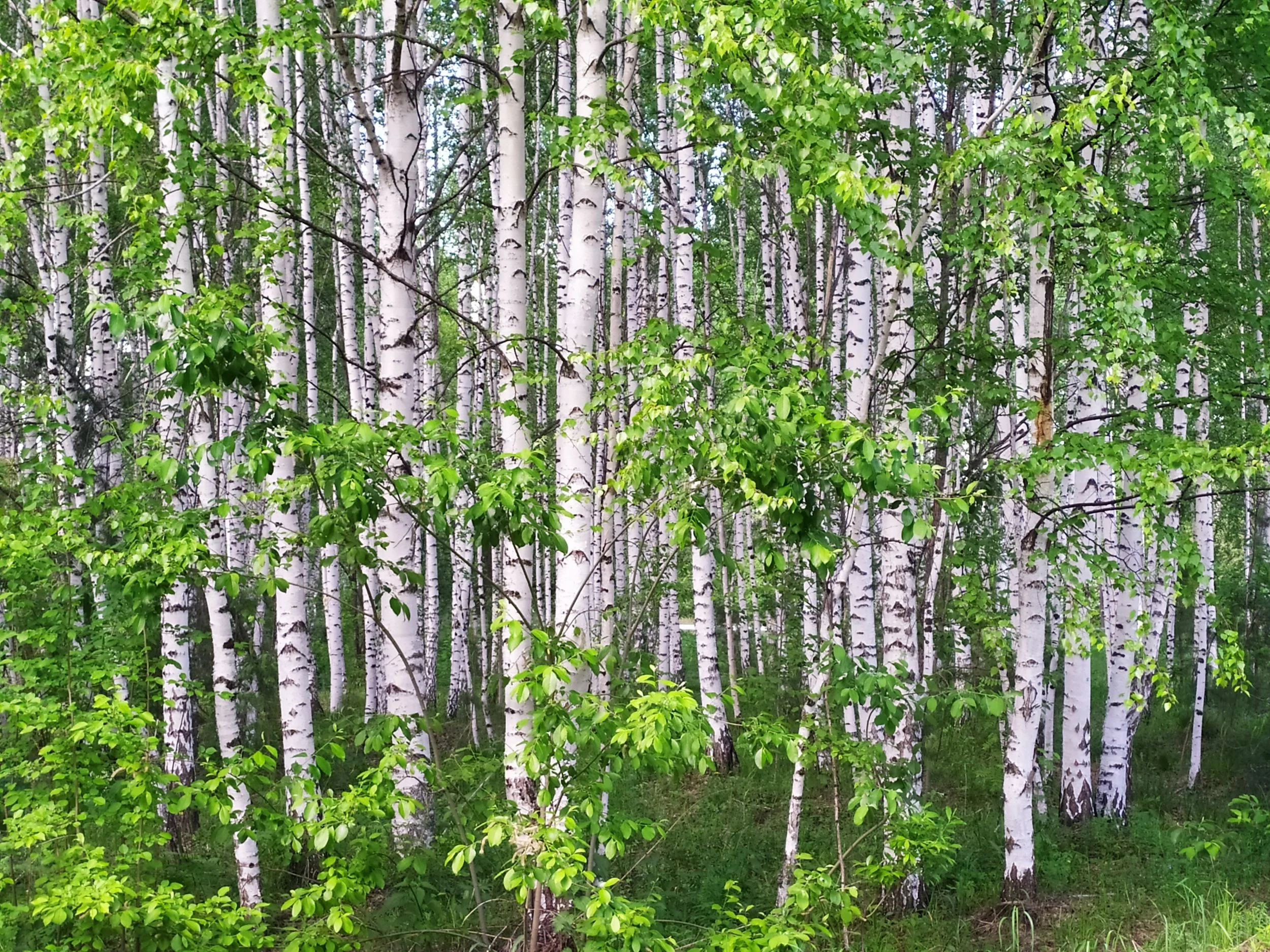
The young branches are of a rich red brown or orange brown, and the trunks usually white, especially in the second species of B. alba, B. verrucosa. B. pubescens is darker, and has downy instead of warted twigs.
The wood is soft and not very durable, but being cheap, and the tree being able to thrive in any situation and soil, growing all over Europe, is used for many humble purposes, such as bobbins for thread mills, herring-barrel staves, broom handles, and various fancy articles. In country districts the Birch has very many uses, the lighter twigs being employed for thatching and wattles. The twigs are also used in broom making and in the manufacture of cloth. The tree has also been one of the sources from which asphyxiating gases have been manufactured, and its charcoal is much used for gunpowder.
The white epidermis of the bark is separable into thin layers, which may be employed as a substitute for oiled paper and applied to various economical uses. It yields oil of Birch Tar, and the peculiar, well-known odour of russia leather is due to the use of this oil in the process of dressing. It likewise imparts durability to leather, and it isowing to its presence that books bound in russia leather are not liable to become mouldy. The production of Birch Tar oil is a Russian industry of considerable importance. It is also distilled in Holland and Germany, but these oils are appreciably different from the Russian oil. It has the property of keeping away insects and preventing gnatbites when smeared on the hands. It is likewise employed in photography.
Birch bark only contains about 3 percent of tannic acid, but is extensively used for tanning, wherever there are large birch forests, throughout Northern Europe. As it gives a pale colour to the skin, it is used for the preliminary and the final stages of tanning. It contains betulin and betuls camphor.
The leaves contain betulorentic acid.
Various parts of the tree have been applied to medicinal uses. The young shoots and leaves secrete a resinous substance having acid properties, which, combined with alkalies, is said to be a tonic laxative. The leaves have a peculiar, aromatic, agreeable odour and a bitter taste, and have been employed in the form of infusion (Birch Tea) in gout, rheumatism and dropsy, and recommended as a reliable solvent of stone in the kidneys. With the bark they resolve and resist putrefaction. A decoction of them is good for bathing skin eruptions, and is serviceable in dropsy.
The oil is astringent, and is mainly employed for its curative effects in skin affections, especially eczema, but is also used for some Internal maladies.
The inner bark is bitter and astringent, and has been used in intermittent fevers.
The vernal sap is diuretic.
Moxa is made from the yellow, fungous excrescences of the wood, which sometimes swell out from the fissures.
(credit: A Modern Herbal, Volumes 1 & 2 by Margaret Grieve)
Garden Use:
Medicinal | Ornamental
Growing Notes:
Exerpt from Ellacombe:
BIRCH
Shakespeare only mentions this one unpleasant use of the Birch tree, the manufacture of Birch rods; and for such it seems to have been chiefly valued in his day. "I have not red of any vertue it hath in physick," says Turner; "howbeit, it serveth for many good uses, and for none better than for betynge of stubborn boys, that either lye or will not learn." Yet the Birch is not without interest. The word "Birch" is the same as "bark," meaning first the rind of a tree and then a barque or boat (from which we also get our word "barge"), and so the very name carries us to those early times when the Birch was considered one of the most useful of trees, as it still is in most northern countries, where it grows at a higher degree of latitude than any other tree. Its bark was especially useful, being useful for cordage, and matting, and roofing, while the tree itself formed the early British canoes, as it still forms the canoes of the North American Indians, for which it is well suited, from its lightness and ease in working.
In Northern Europe it is the most universal and the most useful of trees. It is "the superlative tree in respect of the ground it covers, and in the variety of purposes to which it is converted in Lapland, where the natives sit in birchen huts on birchen chairs, wearing birchen boots and breeches, with caps and capes of the same material, warming themselves by fires of birchwood charcoal, reading books bound in birch, and eating herrings from a birchen platter, pickled in a birchen cask. Their baskets, boats, harness, and utensils are all of Birch; in short, from cradle to coffin, the Birch forms the peculiar environment of the Laplander."[36:1] In England we still admire its graceful beauty, whether it grows in our woods or our gardens, and we welcome its pleasant odour on our Russia leather bound books; but we have ceased to make beer from its young shoots,[36:2] and we hold it in almost as low repute (from the utilitarian point of view) as Turner and Shakespeare seem to have held it.
FOOTNOTES:
[36:1] "Gardener's Chronicle."
[36:2] "Although beer is now seldom made from birchen twigs, yet it is by no means an uncommon practice in some country districts to tap the white trunks of Birches, and collect the sweet sap which exudes from them for wine-making purposes. In some parts of Leicestershire this sap is collected in large quantities every spring, and birch wine, when well made, is a wholesome and by no means an unpleasant beverage."--B. in The Garden, April, 1877. "The Finlanders substitute the leaves of Birch for those of the tea-plant; the Swedes extract a syrup from the sap, from which they make a spirituous liquor. In London they make champagne of it. The most virtuous uses to which it is applied are brooms and wooden shoes."--A Tour Round My Garden, Letter xix.