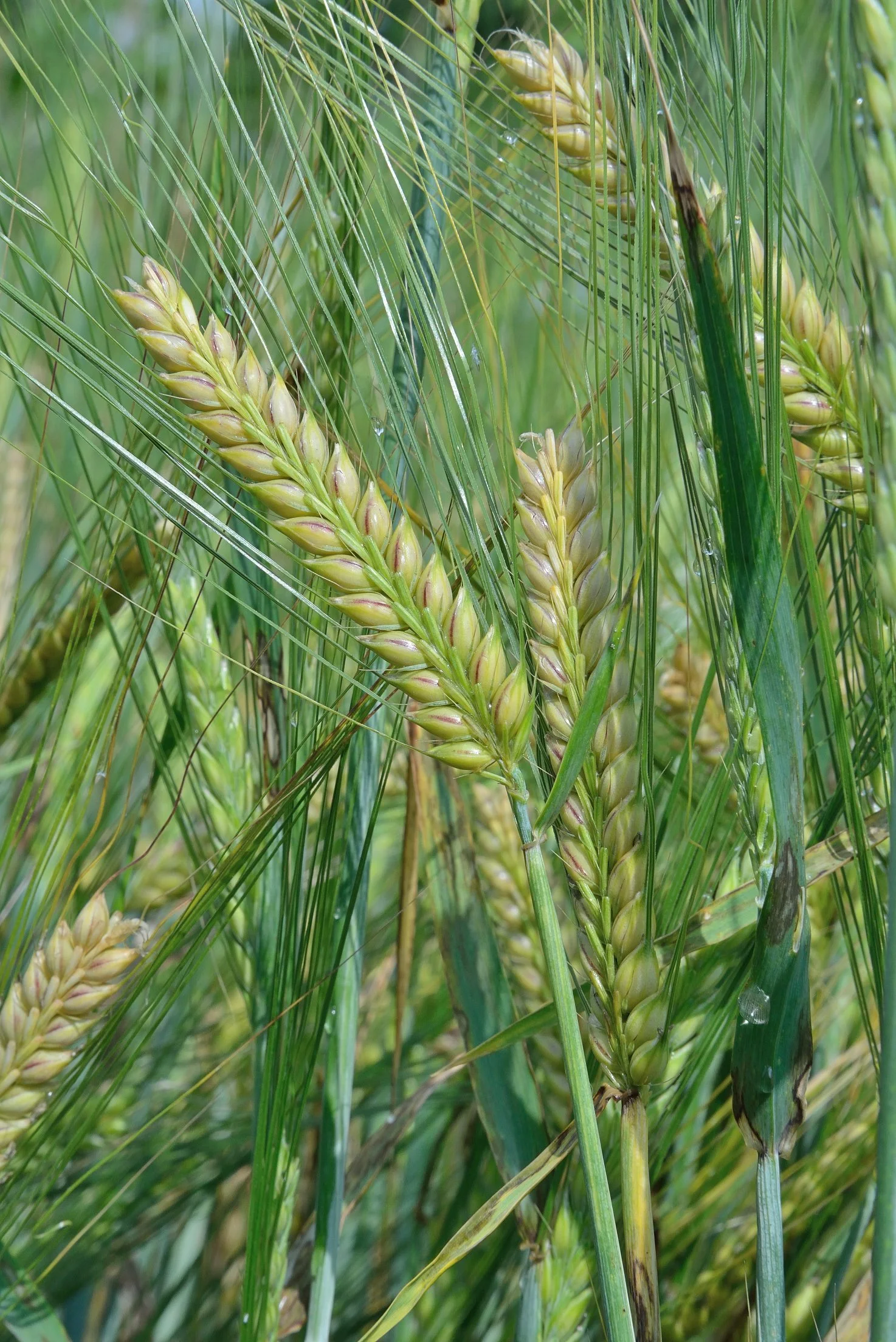
Barley
Play References:
[Iris]
Ceres, most bounteous lady, thy rich leas Of Wheat, Rye, Barley, Vetches, Oats, and Pease.
The Tempest, act iv, sc. 1
[Constable]
Can sodden water, A drench for surrein'd jades, their Barley broth, Decoct their cold blood to such valiant heat?
Henry V, act iii, sc. 5
Garden group discussion on Shakespeare’s use of plant:
Botanical Name(s) of varieties common in Shakespeare’s England:
Hordeum distichon
Description:
Pearl Barley is the grain without its skin; rounded and polished; this is the official variety. Taste and odour farinaceous. The Scotch, milled, or pot barley isthe grain with husks only partly removed. Patent Barley is the ground decorticated grain.
Pearl Barley is used for the preparation of a decoction which is a nutritive and demulcent drink in febrile conditions and in catarrhal affections of the respiratory and urinary organs: barley water is used to dilute cows' milk for young infants, it prevents the formation of hard masses of curd in the stomach. Malt is produced from barley by a process of steeping and drying which develop a ferment 'diatase' needed for the production of alcoholic malt liquors, but in the form of Malt Extract it is largely used in medicine. Vinegar is an acid liquid produced by oxidation of fermented malt wort. Malt vinegar is the only vinegar that should be used medicinally.
(credit: A Modern Herbal, Volumes 1 & 2 by Margaret Grieve)
Garden Use:
Medicinal | Ornamental
Growing Notes:
h
Exerpt from Ellacombe:
BARLEY
These two passages require little note. The Barley (Hordeum vulgare) of Shakespeare's time and our own is the same. We may note, however, that the Barley broth (2) of which the French Constable spoke so contemptuously as the food of English soldiers was probably beer, which long before the time of Henry V. was so celebrated that it gave its name to the plant (Barley being simply the Beer-plant), and in Shakespeare's time, "though strangers never heard of such a word or such a thing, by reason it is not everyewhere made," yet "our London Beere-Brewers would scorne to learne to make beere of either French or Dutch" (Gerard).
FOOTNOTES:
[30:1] "Vires ordea prestant."--Modus Cenandi, 176. ("Babee's Book.")