Balm
Play References:
[K. Richard]
Not all the water in the rough rude sea
Can wash the Balm from an anointed king.
Richard II, act iii, sc. 2
[K. Richard]
With mine own tears I wash away my Balm.
Ibid., act iv, sc. 1
[K. Henry]
'Tis not the Balm, the sceptre, and the ball.
Henry V, act iv, sc. 1
[K. Henry]
Thy place is fill'd, thy sceptre wrung from thee,
Thy Balm wash'd off, wherewith thou wast anointed.
Henry VI Part 3, act iii, sc. 1
[K. Henry]
My pity hath been Balm to heal their wounds. Ibid., act iv, sc. 8
[Lady Anne]
I pour the helpless Balm of my poor eyes.
Richard III, act i, sc. 2
[Troilus]
But, saying thus, instead of oil and Balm,
Thou lay'st in every gash that love hath given me
The knife that made it.
Troilus and Cressida, act i, sc. 1
[1st Senator]
We sent to thee, to give thy rages Balm.
Timon of Athens, act v, sc. 4
[France]
Balm of your age,
Most best, most dearest.
King Lear, act i, sc. 1
[K. Henry]
Let all the tears that should bedew my hearse
Be drops of Balm to sanctify thy head
Henry IV part 2, act iv, sc. 5
[Mowbray]
I am disgraced, impeach'd, and baffled here:
Pierced to the soul with slander's venom'd spear;
The which no Balm can cure, but his heart-blood
Which breathed this poison.
Richard II, act i, sc. 1
[Dromio of Syracuse]
Our fraughtage, Sir,
I have conveyed aboard, and I have bought
The oil, the Balsamum, and aqua vitæ
Comedy of Errors, act iv, sc. 1
[Alcibiades]
Is this the Balsam that the usuring Senate
Pours into captains' wounds?
Timon of Athens, act iii, sc. 5
[Macbeth]
Sleep that knits up the ravell'd sleave of care,
The death of each day's life, sore labour's bath,
Balm of hurt minds, great Nature's second course,
Chief nourisher in life's feast
Macbeth, act ii, sc. 2
[Quickly]
The several chairs of order look you scour
With juice of Balm and every precious flowe
The Merry Wives of Windsor, act v, sc. 5
[Cleopatra]
As sweet as Balm, as soft as air, as gentle.
Antony and Cleopatra, act v, sc. 2
Garden group discussion on Shakespeare’s use of plant:
Botanical Name(s) of varieties common in Shakespeare’s England:
Melissa officinalis
Melittis melissophyllum
Balsam | Balsamam
Description:
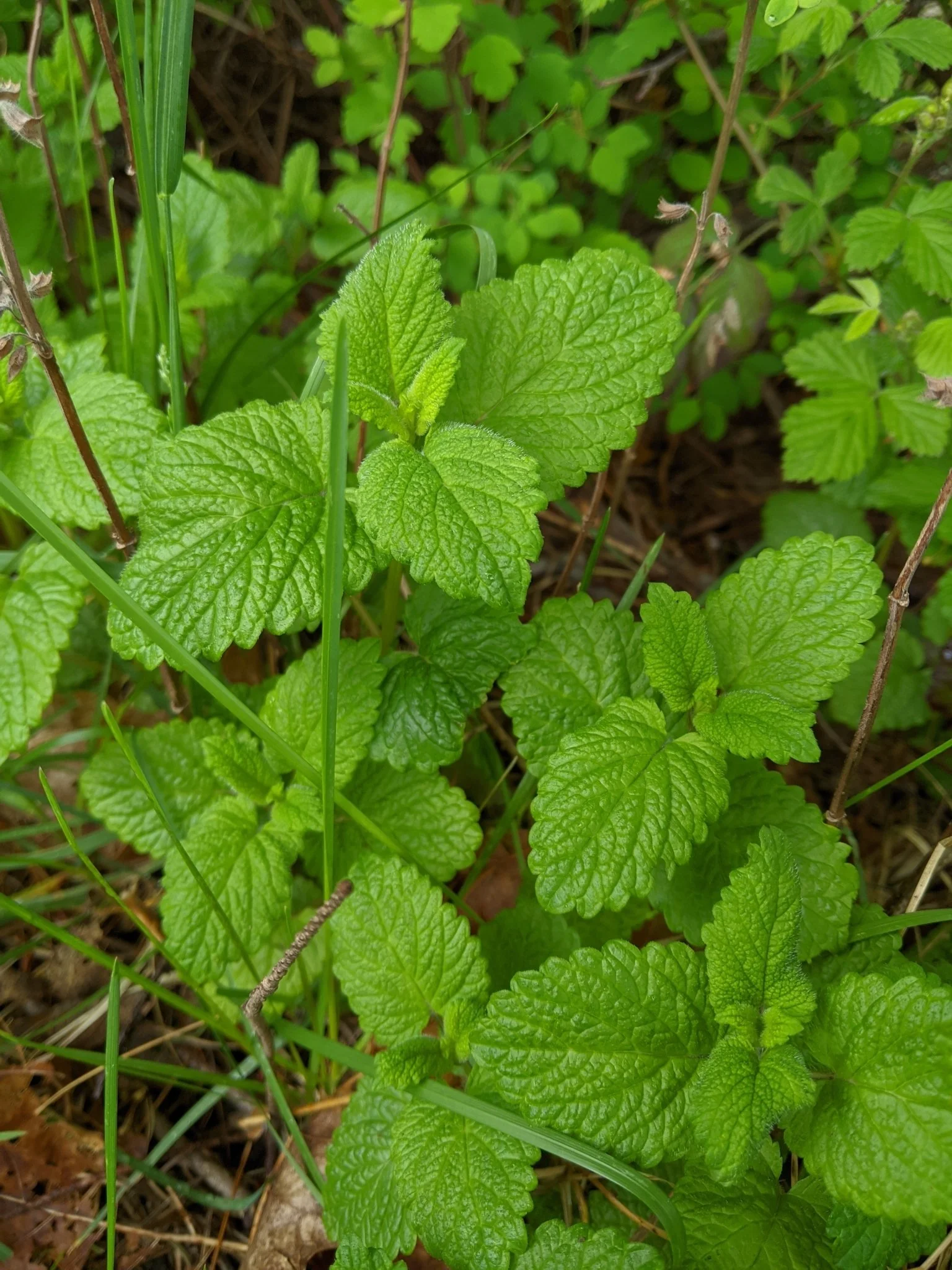
The root-stock is short, the stem square and branching, grows 1 to 2 feet high, and has at each joint pairs of broadly ovate or heart-shaped, crenate or toothed leaves which emit a fragrant lemon odour when bruised. They also have a distinct lemon taste. The flowers, white or yellowish, are in loose, small bunches from the axils of the leaves and bloom from June to October. The plant dies down in winter, but the root is perennial.
Gerard says: 'It is profitably planted where bees are kept. The hives of bees being rubbed with the leaves of bawme, causeth the bees to keep together, and causeth others to come with them.' And again quoting Pliny, 'When they are strayed away, they do find their way home by it.' Pliny says: 'It is of so great virtue that though it be but tied to his sword that hath given the wound it stauncheth the blood.' Gerard also tells us: 'The juice of Balm glueth together greene wounds,' and gives the opinion of Pliny and Dioscorides that 'Balm, being leaves steeped in wine, and the wine drunk, and the leaves applied externally, were considered to be a certain cure for the bites of venomous beasts and the stings of scorpions. It is now recognized as a scientific fact that the balsamic oils of aromatic plants make excellent surgical dressings: they give off ozone and thus exercise anti-putrescent effects. Being chemical hydrocarbons, they contain so little oxygen that in wounds dressed with the fixed balsamic herbal oils, the atomic germs of disease are starved out, and the resinous parts of these balsamic oils, as they dry upon the sore or wound, seal it up and effectually exclude all noxious air.
(credit: A Modern Herbal, Volumes 1 & 2 by Margaret Grieve)
Garden Use:
Medicinal | Ornamental
Growing Notes:
Exerpt from Ellacombe:
BALM
In all these passages, the reference is to the Balm or Balsam which was imported from the East, from very early times, and was highly valued for its curative properties. The origin of Balsam was for a long time a secret, but it is now known to have been the produce of several gum-bearing trees, especially the Pistacia lentiscus and the Balsamodendron Gileadense; and now, as then, the name is not strictly confined to the produce of any one plant. But in Mistress Quickly’s and Cleopatra’s lines, the reference is no doubt to the Sweet Balm of the English gardens (Melissa officinalis), a plant highly prized by our ancestors for its medicinal qualities (now known to be of little value), and still valued for its pleasant scent and its high value as a bee plant, which is shown by its old Greek and Latin names, Melissa, Mellissophyllum, and Apiastrum. The Bastard Balm (Melittis melissophyllum) is a handsome native plant, found sparingly in Devonshire, Hampshire, and a few other places, and is well worth growing wherever it can be induced to grow; but it is a very capricious plant, and is apparently not fond of garden cultivation. "Très jolie plante, mais d'une culture difficile" (Vilmorin). It probably would thrive best in the shade, as it is found in copses.