Barnacles
Play References:
[Caliban]
We shall lose our time
And all be turn'd to Barnacles.
The Tempest, act iv, sc. 1
Garden group discussion on Shakespeare’s use of plant:
Botanical Name(s) of varieties common in Shakespeare’s England:
Chthamalus stellatus
Description:
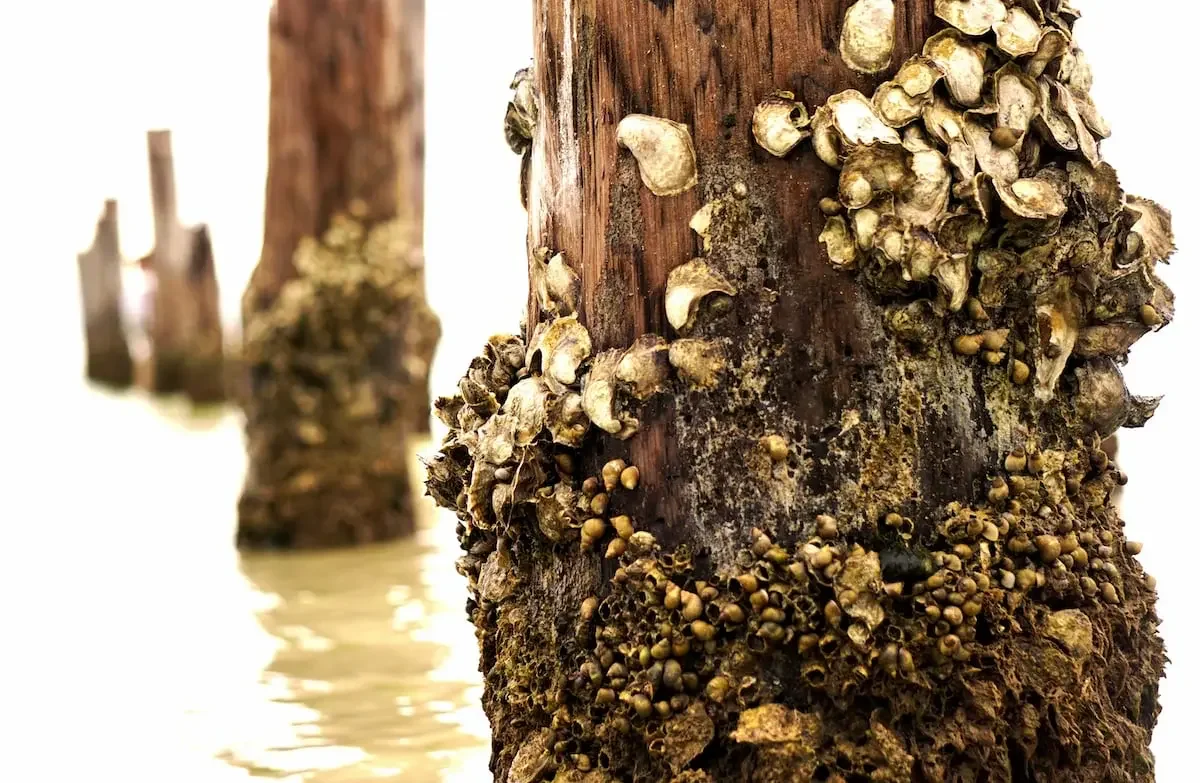
Barnacles are members of the Animal kingdom, specifically arthropods. They are related to crabs and lobsters, with similar larvae. Barnacles are exclusively marine invertebrates; many species live in shallow and tidal waters. Some 2,100 species have been described.
In folklore, barnacle geese were once held to emerge fully formed from goose barnacles.
The word "barnacle" is attested in the early 13th century as Middle English "bernekke" or "bernake", close to Old French "bernaque" and medieval Latin bernacae or berneka, denoting the barnacle goose. Because the full life cycles of both barnacles and geese were unknown at the time, (geese spend their breeding seasons in the Arctic) a folktale emerged that geese hatched from barnacles. It was not applied strictly to the arthropod until the 1580s. The ultimate meaning of the word is unknown.
Most barnacles are encrusters, attaching themselves to a hard substrate such as a rock, the shell of a mollusc, or a ship; or to an animal such as a whale (whale barnacles). The most common form, acorn barnacles, are sessile, growing their shells directly onto the substrate, whereas goose barnacles attach themselves by means of a stalk. (credit: Wikipedia)
Garden Use:
None
Exerpt from Ellacombe:
BARNACLES
It may seem absurd to include Barnacles among plants; but in the time of Shakespeare the Barnacle tree was firmly believed in, and Gerard gives a plate of "the Goose tree, Barnacle tree, or the tree bearing Geese," and says that he declares "what our eies have seene, and our hands have touched."
A full account of the fable will be found in Harting's "Ornithology of Shakespeare," p. 247, and an excellent account in Lee's "Sea Fables Explained" (Fisheries Exhibition handbooks), p. 98. But neither of these writers have quoted the testimony of Sir John Mandeville, which is, however, well worth notice. When he was told in "Caldilhe" of a tree that bore "a lytylle Best in Flessche in Bon and Blode as though it were a lytylle Lomb, withouten Wolle," he did not refuse to believe them, for he says, "I tolde hem of als gret a marveylle to hem that is amonges us; and that was of the Bernakes. For I tolde hem, that in our Contree weren Trees, that beren a Fruyt, that becomen Briddes fleeynge; and tho that fallen in the Water lyven, and thei that fallen on the Erthe dyen anon; and thei ben right gode to mannes mete. And here of had thei als gret marvaylle that sume of hem trowed, it were an impossible thing to be" ("Voiage and Travaille," c. xxvi.).